How air traffic control keeps planes apart
How air traffic control separates aircraft: vertical spacing under RVSM, lateral minima, and why the numbers depend on the airspace.
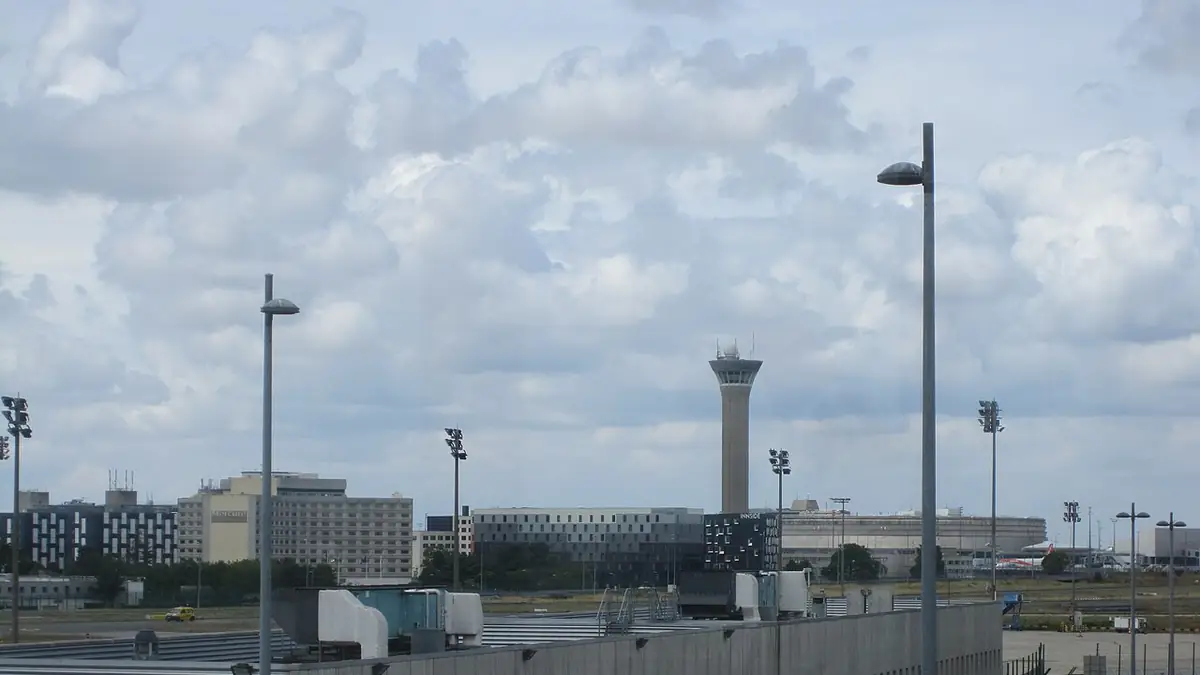
Every day, thousands of aircraft share the sky over a few countries, and most of the time none of them comes close to another. That is not luck. It is separation: a set minimum distance that air traffic control (ATC) keeps between aircraft, sideways and up and down.
The short version
Controllers use two kinds of spacing:
- Vertical separation: the gap in altitude between aircraft flying at different levels.
- Lateral separation: the gap sideways, measured as distance along the track or between positions.
Above a certain height, the vertical gap is smaller than many travellers expect. That is because of a change called RVSM, which we explain below.
Vertical separation and RVSM
Aircraft fly at fixed flight levels, given in hundreds of feet. Between FL290 (29,000 ft) and FL410 (41,000 ft), the international standard used to be 2,000 ft between aircraft. Reduced Vertical Separation Minimum (RVSM) cut that to 1,000 ft, the same spacing used below FL290. The change was rolled out between 1997 and 2005 across Europe, North Africa, Southeast Asia, North America, South America and the North Atlantic, South Atlantic and Pacific oceans.
RVSM is not automatic for every aircraft. An operator needs approval from the aircraft's state of registry, and the airspace must approve the minimum too. An aircraft that is not approved is kept apart by the wider spacing.
ICAO's own RVSM manual explains the approval and monitoring framework. See the ICAO ATS RVSM manual for the detail.
Lateral separation
Sideways spacing depends on how the aircraft are being watched:
- With radar or ADS-B surveillance, a common en-route minimum is 5 nautical miles between aircraft.
- In some terminal airspace near airports, the minimum can be 3 nautical miles.
- Where there is no surveillance, such as over large ocean areas, controllers use procedural separation based on position reports, timing and routes.
These are common standards, not universal rules. The figure that applies is set by the authority that runs the airspace, and it is published in that country's aeronautical information publication (AIP). Check the AIP before you rely on a number for a specific route.
What happens when spacing is at risk
Controllers give instructions that change speed, heading or altitude so that the minimum is kept. Pilots also carry a safety net: the Traffic Collision Avoidance System (TCAS) warns of nearby traffic and, when needed, gives a resolution advisory to climb or descend. TCAS is a last line of defence, not a substitute for ATC spacing.
For professionals
- Separation standards are set through ICAO documents and then implemented by each state. Controllers work to the state's rules, not ICAO's minimums alone.
- Surveillance quality determines which lateral minimum applies. Multilateration and ADS-B coverage can change what a sector is allowed to use.
- We have not checked a particular national rule set in this article. For an operational question, use the current AIP and the controller's own procedures.
Sources
Featured image: Photo: DiscoA340, CC BY-SA 4.0, via Wikimedia Commons. Source
